03. March 2026
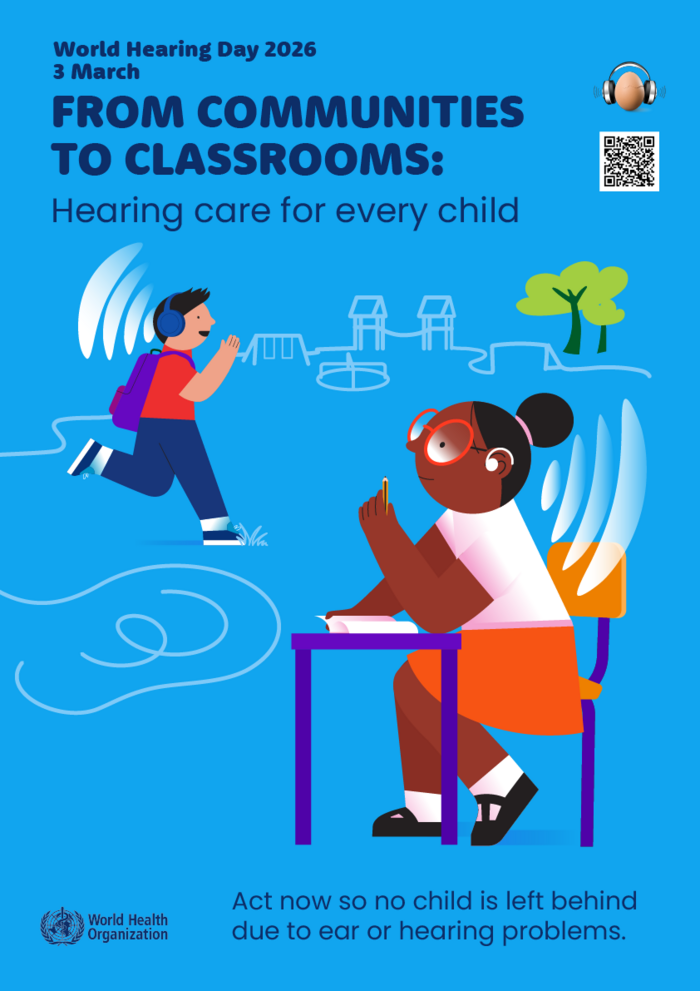
World Hearing Day 2026:
Empower yourself and your hearing!

With the theme ‘SO WHAT?‘, VARTA’s campaign for World Hearing Day 2026 highlights the importance of ear and hearing care and encourages people to take proactive steps to protect their hearing throughout life. Our goal is to raise awareness and reduce stigma around hearing health - especially among children. Hearing loss in children often goes undiagnosed or untreated, which can lead to serious long-term consequences. Choosing to care for one’s hearing is an act of courage and self-confidence. That’s why our campaign features empowered, confident, and courageous children who take action for their hearing health - regardless of what others might think.
3 March is World Hearing Day
World Hearing Day is held on 3 March each year to raise awareness on how to prevent deafness and hearing loss and promote ear and hearing care across the world. Each year, the World Health Organization develops a global campaign theme and invites all stakeholders to join this initiative.
In 2026, WHO focuses on children’s hearing with the theme „From communities to schools: hearing care for all children!“ This campaign focuses on preventing avoidable child-hood hearing loss & ensuring early identification of and care for children with hearing problems. All stakeholders are invited to act now so no child is left behind due to ear or hearing problems.1
Changing mindsets about hearing aid loss and ear care
Globally more than 1.5 billion people experience some degree of hearing loss and by 2050, over 700 million people are expected to have disabling hearing loss. The prevalence of disabling hearing loss increases with age, rising from 15 % among people in their 60s, to 58 % among those aged more than 90 years, but children can also be affected. In fact, most cases of hearing loss among children are due to preventable causes & globally around 90 million children aged 5-19 experience hearing loss!2
Hearing loss can be caused by genetic factors, disease, infection, ototoxic medication, loud noise, trauma to the ear or head or age-related sensorineural degeneration. How we hear in the future depends on how we care for our ears, as many cases of hearing loss can be prevented through safe hearing and good hearing care. Early detection of hearing loss and access to timely rehabilitation are crucial to achieving the greatest potential. You can take steps today to maintain healthy hearing throughout your life!2
Changing mindsets about hearing aids
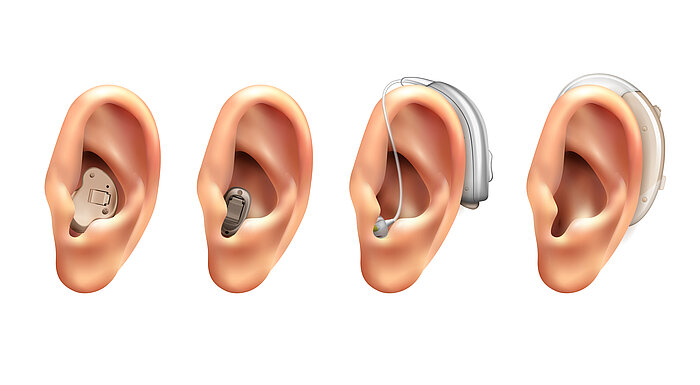
Did you know that only 17 % of those who could benefit from using a hearing aid, actually uses one? Many people are reluctant to get their hearing tested, as they don‘t know the dangers of unaddressed hearing loss or they avoid hearing aids as they think the hearing aids are „noticeable“, “embarrassing to wear”, or “make you look old”.3 In fact, there are many different types of hearing aids, and they come in different colours, sizes and shapes. The most common types are in-the-ear (ITE) and behind-the-ear hearing aids (BTE).4
Hearing aid users experience a significant improvement in their hearing ability and quality of life. They benefit not only from improved participation in community life, in their social and family environment and in leisure activities, but also from a reduction in barriers to employment and educational opportunities.2
The battery of a hearing aid has to be changed every 7-10 days, depending on the battery type, on how you use your hearing aids and on what model you have. There are four different sizes of hearing aid batteries available on the market. The sizes from smallest to largest are 10/PR70, 312/PR41, 13/PR48 and 675/PR44. VARTA hearing aid batteries are produced in Germany and provide reliable, long-lasting energy with highest performance for hearing aids. The premium batteries provide stable voltage for wireless streaming, enabling a more efficient connection and clear sound with audio devices.
Facts instead of myths — what can be done to prevent hearing loss.
1WHO World Hearing Day 2026 who.int/campaigns/world-hearing-day/2026;
2WHO world report on hearing www.who.int/publications/i/item/9789240020481;
3ENT Consultants www.entconsultants.net/why-is-there-a-stigma-around-wearing-hearing-aids/;
4WHO tips for hearing aid users cdn.who.int/media/docs/default-source/ncds/sdr/deafness-and-hearing-loss/0123-tips-for-hearing-aid-users-flyer.pdf?sfvrsn=96b161cf_20&download=true;
Further information about our VARTA hearing aid batteries can be found here:
https://www.varta-ag.com/en/consumer/product-categories/hearing-aid-batteries