













| Product | Compatibility | Note |
| VARTA family | Not compatible | Operation exclusively in standard battery mode (no dynamic charging possible). In an AC cascade via Varta.iq, a maximum of one device is permitted. |
| VARTA link | Not compatible | |
| VARTA storage in a cascade | Not compatible | In an AC cascade via VARTA iq, a maximum of one device is permitted. AC devices that are part of a cascade cannot be connected to VARTA iq. |
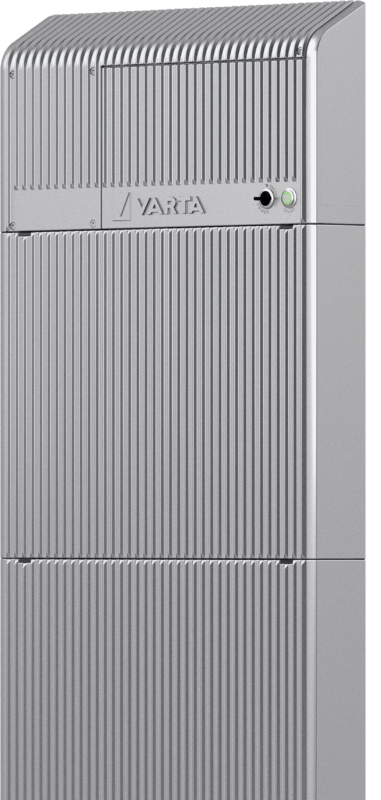
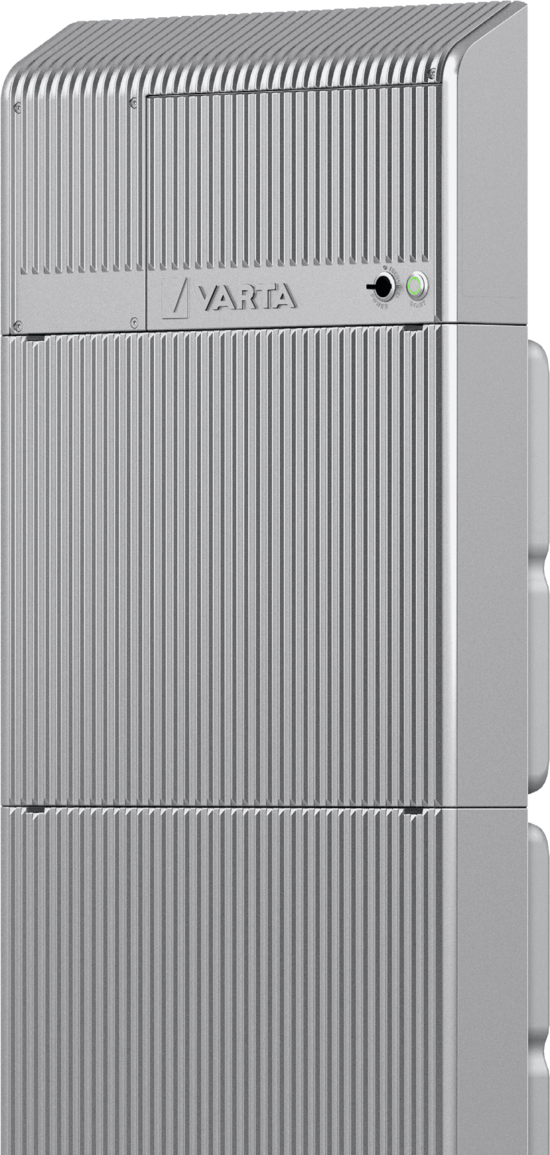
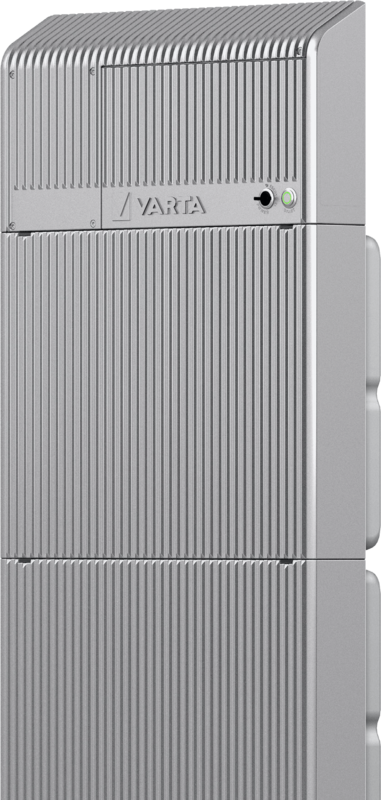
| VARTA element S1 | Compatible | |
| VARTA element S2 | Compatible | |
| VARTA element S3 | Compatible | |
| VARTA element S4 | Compatible | |
| VARTA element backup S5 | Compatible | |
| VARTA pulse | Compatible | |
| VARTA pulse neo | Compatible | |
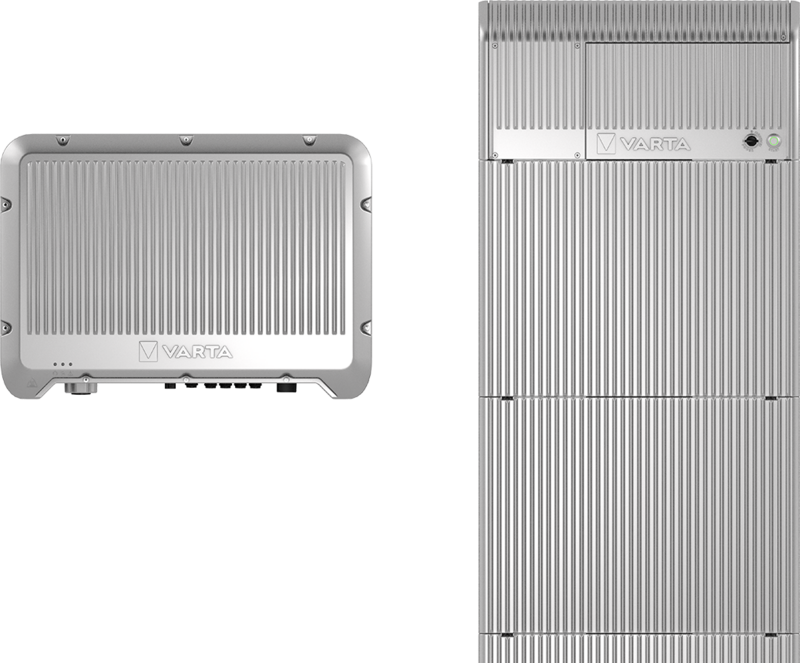
| VARTA wall with SMA VARTA wall with Kostal | Compatible | All battery modes are available for the VARTA wall (incl. dynamic grid charging). Any number of VARTA.wall units can be integrated into an AC cascade via VARTA iq. |
| VARTA wall with Steca | Not compatible |
Battery modes:
- Standard (active): For all active batteries. Minimum and maximum charge limits (%) can be set. Standalone mode means the battery can operate passively.
- Eco: Minimum and maximum charge limits (%) can be set. Morning charge limit (%) defines the charging limit until 11:00 a.m. Goal: the battery should be charged later when peak PV generation occurs.
- Peak Shaving (Premium subscription): Minimum charge limit (%) can be set. Peak shaving limit (%) is the share of the battery reserved for peak shaving. Everything above this is normal self-consumption. Maximum discharge and charge limits can be configured.
- Manual: Minimum and maximum charge limits (%) can be set. Charge/discharge power can be selected manually. This mode is particularly useful in combination with a plan.
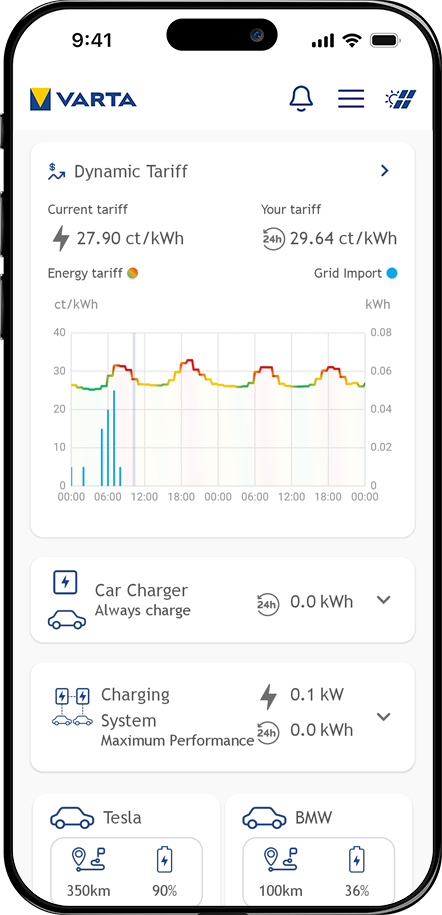
- Tariff-optimized: Users with dynamic tariffs can charge their batteries during times of low electricity prices. To activate this mode, a dynamic tariff must be stored in the tariff settings. If the tariff is below the defined limits, the electric vehicle will also not be charged from the battery storage, but from the grid.